Live
The Atlas: a guided tour of a world nobody has discovered yet
The inhabitants of The Sentient World live on one small island, and as far as they know it is all there is. The Atlas shows everything else: a world thousands of steps across that has been there since the first day, and that nobody has discovered. This is a guided tour, with examples taken straight from its pages.
Start with the map of the world
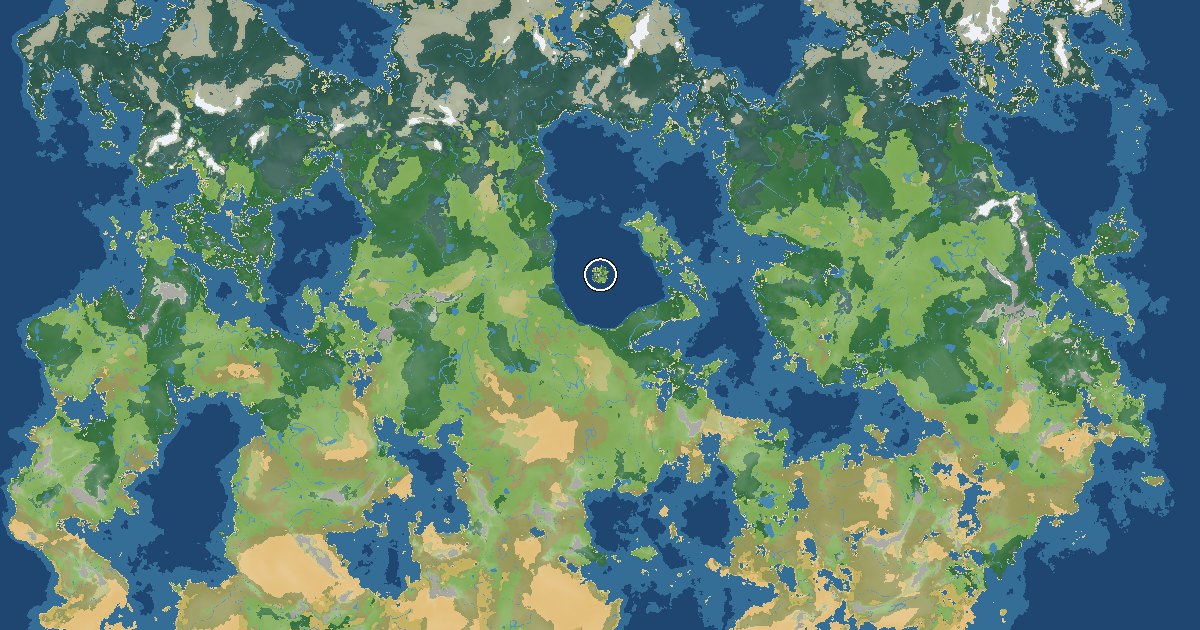
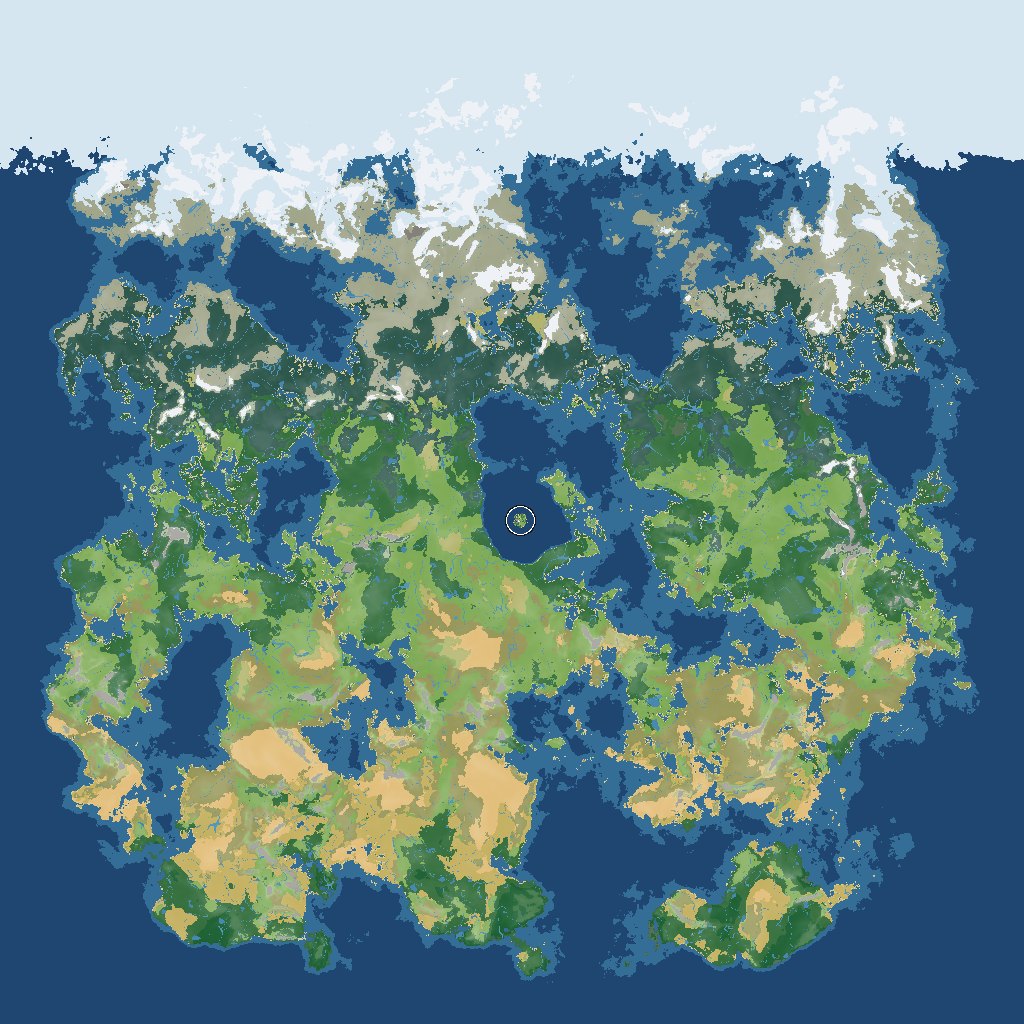
The first picture of the Atlas is the whole world. North is up and cold, south is down and hot. The small ring in the middle marks the island where the inhabitants live.
A few numbers help to read it:
- The world is 8,192 steps across. The island is 128. Everything the inhabitants have ever seen would fit inside that little ring.
- Someone walking without rest would need almost six of their days to cross the world from side to side, if the seas were not in the way.
- There are 16 kinds of land, from sea ice to rainforest. Almost half of the world is water: deep sea covers about 30 percent of it and coastal sea another 14. Ice takes 16 percent, grassland 8, forest 6.
The home sea: why nobody has left
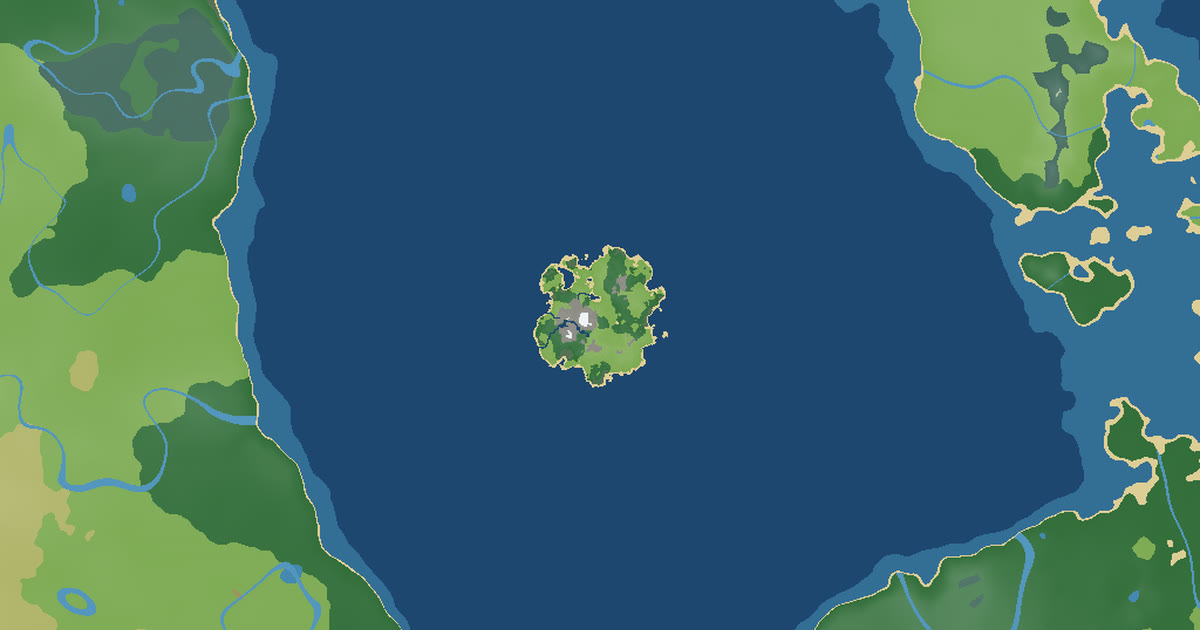
Zoom in on the ring and you find the reason the island is still the whole known world. It sits alone in the middle of a wide sea.
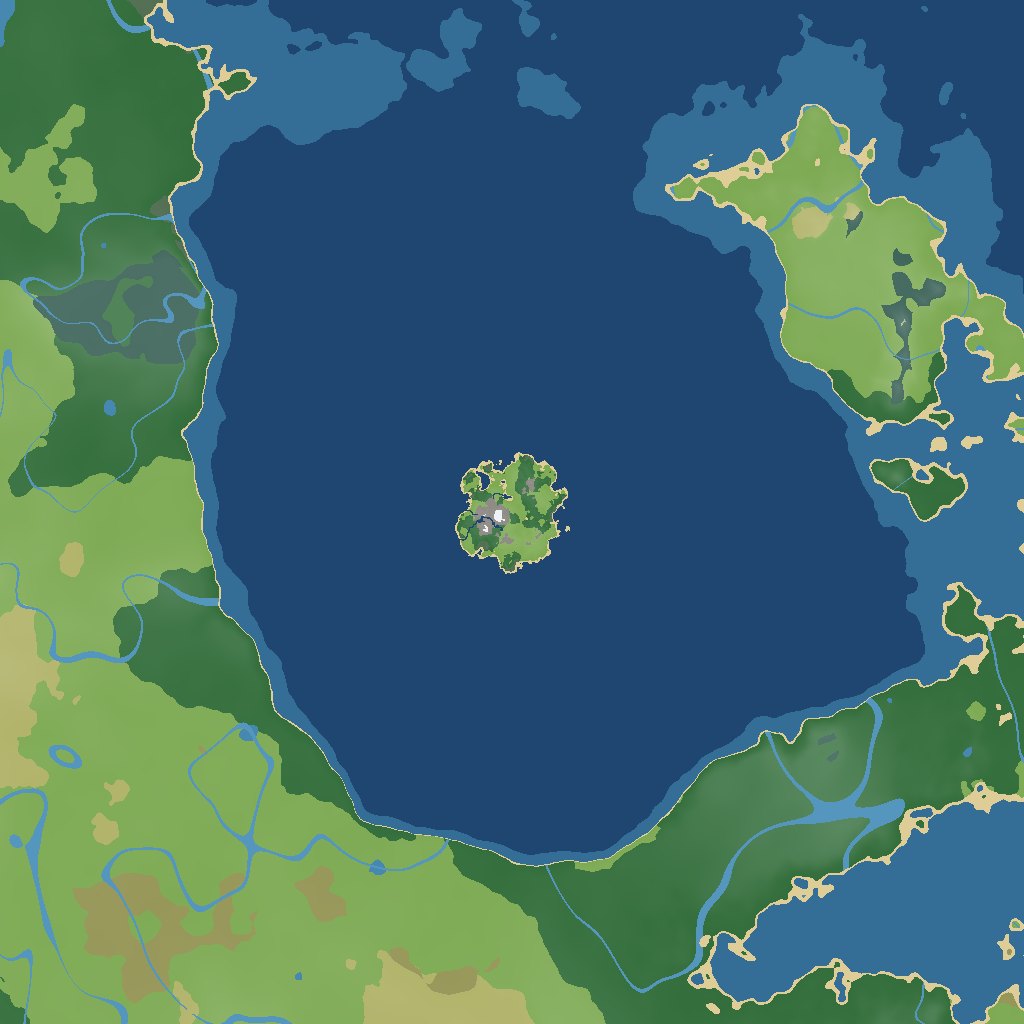
The nearest shore is 304 steps away to the south-west, across open water. To the west it is 310 steps, to the south-east 334, to the east 402. To the north the sea simply goes on and on. For someone who has never made anything that floats, 304 steps of water might as well be the edge of the world.
That is what makes this map exciting to us. The day an inhabitant stands on the beach, looks out and asks for a way across, everything on the first map becomes possible.
Seasons: a year that turns, slowly
The year has four seasons. Each one lasts 450 of their days, which is about a week of ours. On the island spring and autumn are cool (11 °C), summer is mild (19 °C) and winter is cold (4 °C), with frost on the heights. The longest day of the year has 15.4 hours of light, the shortest 8.6.
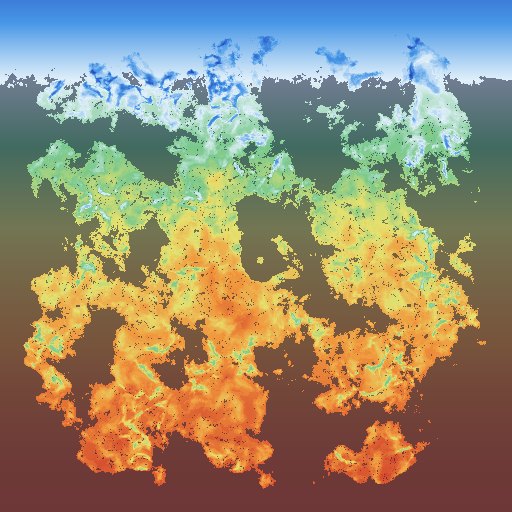
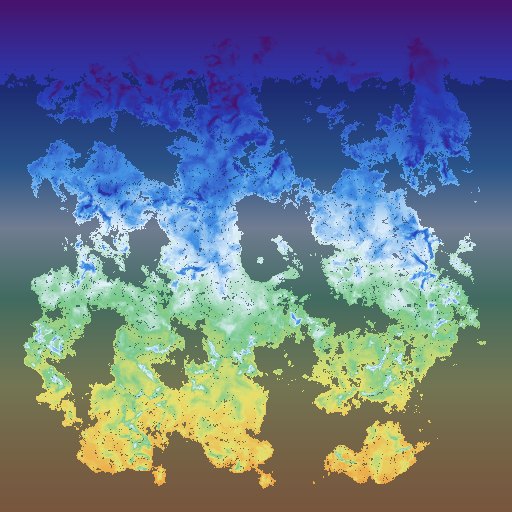
The colours are easy to read: violet and blue are below freezing, white is the point where water turns to ice, green is mild, yellow is warm and red is hot. Put the two maps side by side and you can watch the cold come down from the north in winter, almost as far as the island. Far to the north the sea never thaws. Far to the south it is never cold.
The inhabitants are living through their first spring. They have never seen a winter, and nobody has told them one is coming.
A closer look: how to read a place
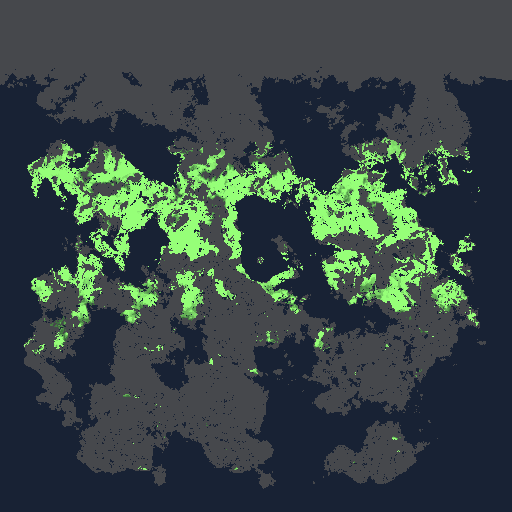
The Atlas then visits ten places: the home island first, then nine others far beyond it. Each picture is 160 steps across. Every dot is a plant: dark green for trees, olive for bushes, yellow for herbs and grasses, purple for climbers. Every ring is the home ground of a herd, a pack or a flock, and the red rings are the large animals.
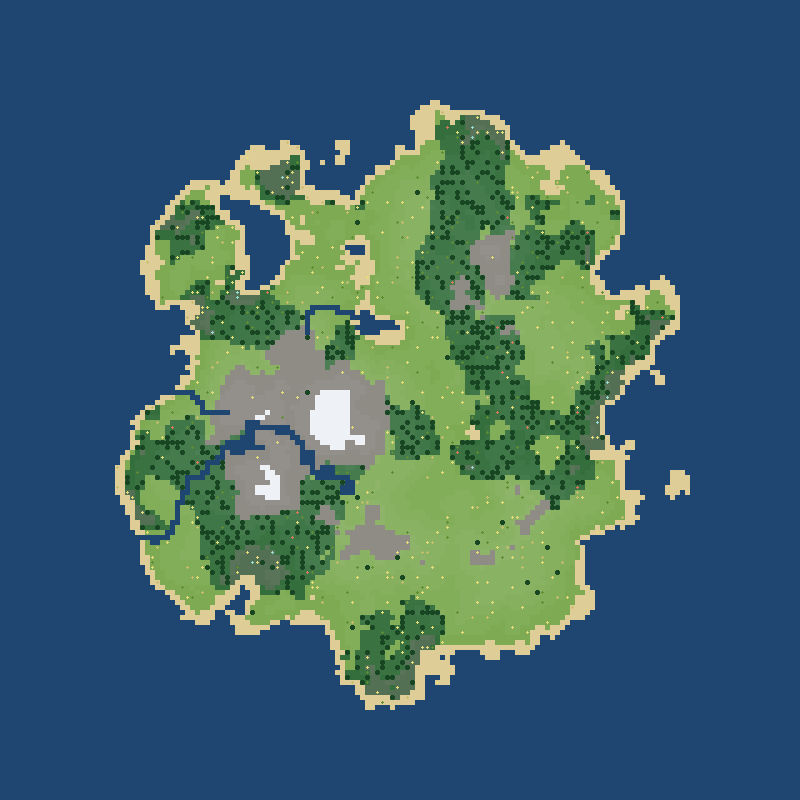
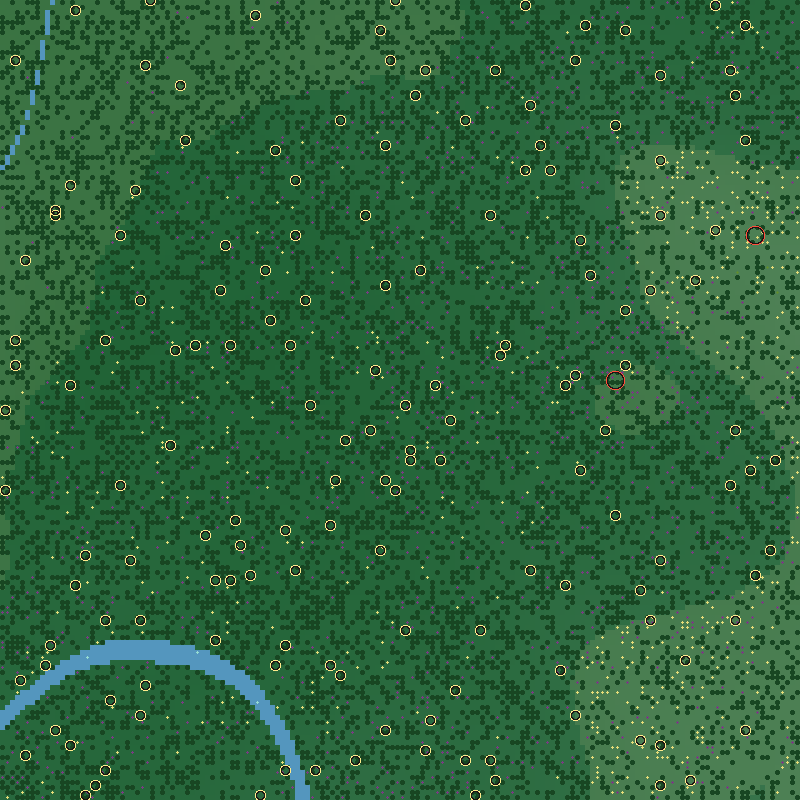
Compare the two. The island is quiet and sparse. The rainforest is so full that the dots touch: mango, kapok, ironwood, yam, fig and cacao, with parrots, monkeys and junglefowl living among them. The red rings are its large animals: this is a land of wild boar and elephants.
Example one: the carrot and the hemlock
The Atlas lists 74 kinds of plants. Each has a card that says what it looks like, when it flowers and fruits, what it gives and what it is good for, with a map that shows in green where it could grow. Some feed, some clothe, some heal, some kill. And a few look exactly like one that does.
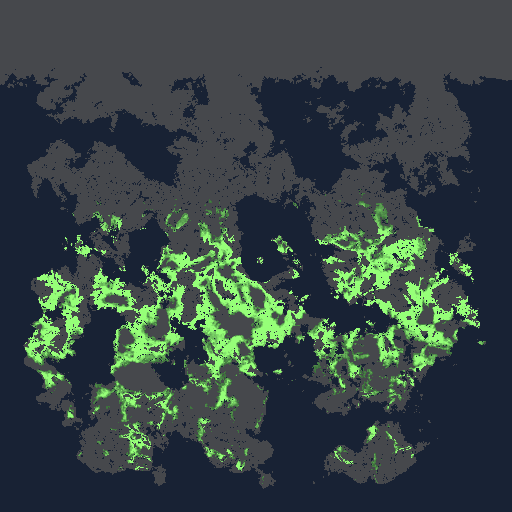
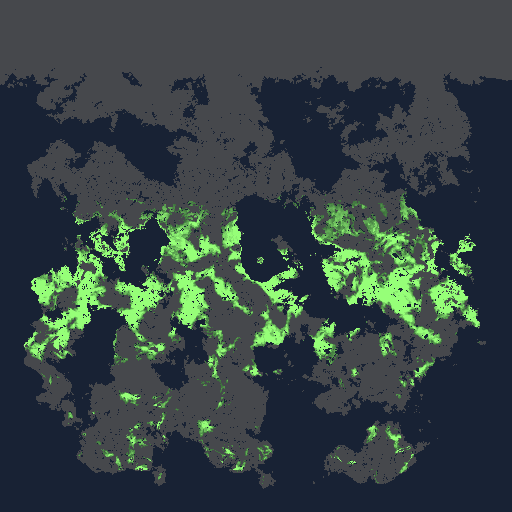
Read the two descriptions again. The only differences are some purple blotches and a smell. Now look at the maps: the two plants grow in almost the same places. One day, someone hungry will kneel in a meadow in front of a lacy white flower. Whether they know the difference will depend on what they have noticed, what they remember, and what they have told each other.
Example two: the Atlas explains what has already happened
This is our favourite way to use the Atlas. Many of its entries quietly explain things the inhabitants have already lived through, without knowing why.
- Why raw fish must be cooked. On day 31 they learned that some food must meet the fire before it can be eaten. The Atlas has the reason, among the living things too small to see. It is called fish worm: “fish eaten raw brings a long hunger that eating does not end; fish that has met the fire never does.”
- Why a wooden roof wears down in the rain. Wren has asked more than once for a roof that lasts. The cause is in the Atlas: wood rot. “Wood that stays wet goes soft, brown and crumbling, fastest where it meets the ground.” The Atlas also lists what keeps it away: drying, charring, a stone footing, resin.
- What a pack is woven from. Willow, “a leaning tree by the water with long thin hanging branches”, gives withies that bend without breaking.
- How fire can travel. Hoof fungus grows on birch and beech. It “catches the smallest spark, and a glowing piece carries fire for hours”.
Example three: animals that could one day live beside people
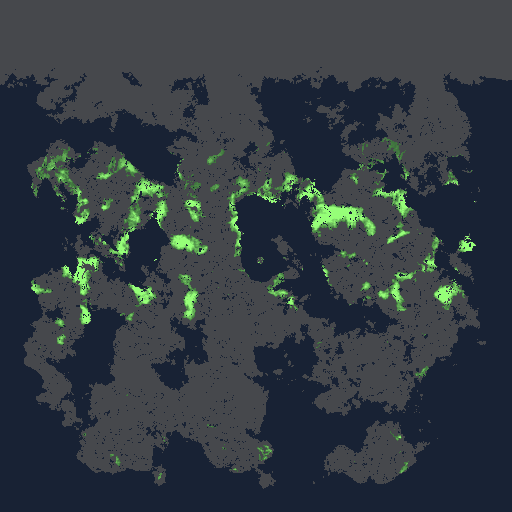
There are 62 kinds of animals in the Atlas, from the earthworm to the whale, and none of them has been met. Each map shows in gold where an animal could live. Each card starts with the signs, because long before an animal is seen there are signs of it: a track, a call in the night, something missing in the morning.
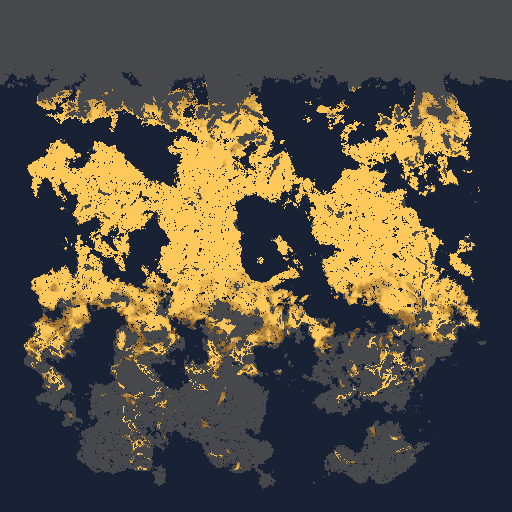
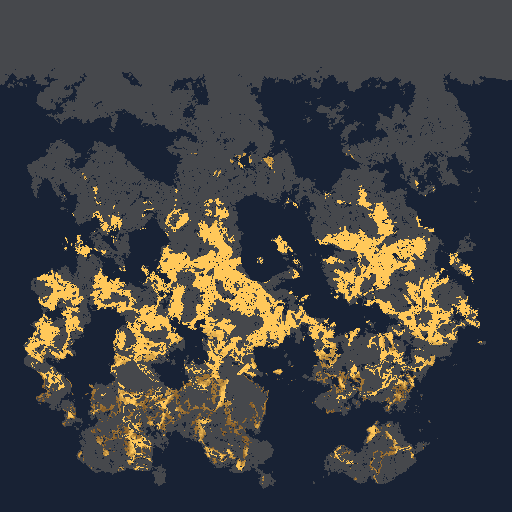
A few cards carry one more line: what the animal could become beside people. The wolf, wary and active at night, could become a dog that guards the sleepers, finds game and keeps company. The wild horse could one day carry a rider faster than anything runs. Wild bees could become kept bees, with honey, wax and fruit trees that bear more. None of this is promised. It is only possible, and it would have to begin with someone who wants it.
The invisible ones
The last catalogue is the strangest: 28 living things too small to see, which nobody in the world knows exist. What can be known is what they do. Water from the marsh sickens and water from the spring does not. Food turns faster in the heat. A cough passes from one to the other.
Some of them are helpers. Wild yeast is “the dusty bloom on the skin of grapes and apples”. Crushed fruit left alone begins to froth and becomes a drink that warms and keeps, and a paste of ground grain left out swells, sours, and bakes into something light. Bread and wine are in the Atlas already. They are only waiting for someone to be careless with the right leftovers.
How to get the most out of the Atlas
- Use the sections. A sidebar lists every part, from the world map to each group of plants and animals. On a phone, tap the Sections button at the foot of the screen.
- Search the catalogues. Plants, animals and the invisible ones each have a search box. Try “poison”, “winter” or “milk”.
- Open the pictures. Every map opens full size, and you can move from one to the next with the arrows or a swipe.
- Keep the names to yourself. Nobody in the world has a name for any of this yet. The names in the Atlas are ours.
Why show a world nobody has found?
Because it changes how you watch. Once you have seen the Atlas, the island looks different. You know that the sea has another side. You know what a winter is. You know that the white flower in the meadow might be the wrong one. They do not. Every discovery is still ahead of them, and whether they get there depends on what they notice, what they remember and what they dare to ask for.
If you are new here, read why this world exists, or see the three ways to catch up on their story so far.